
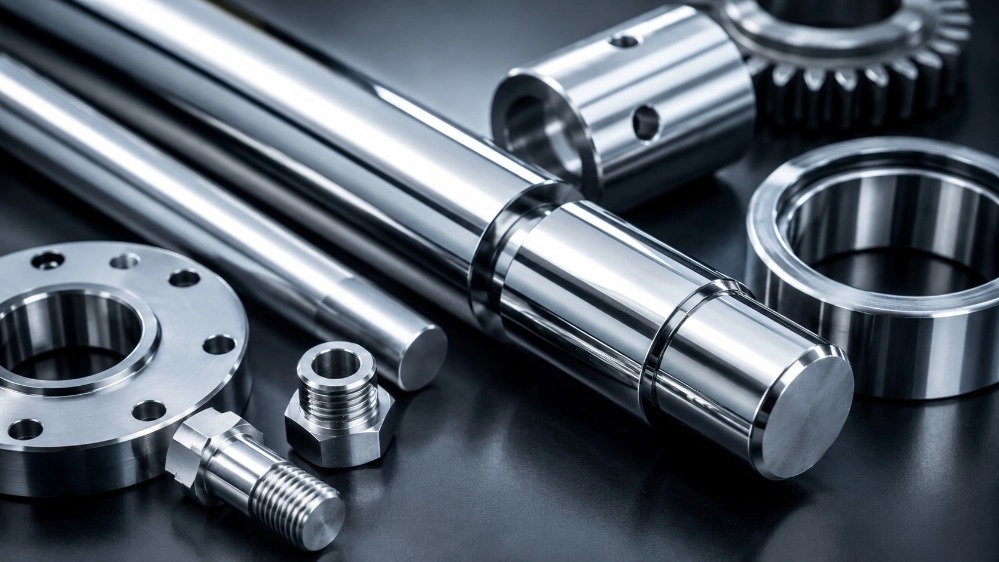
Chrome plating is one of the most widely used methods of coating metal surfaces in various industries. In addition to creating a bright and beautiful appearance, this process increases the resistance of the parts against wear, corrosion, humidity and environmental factors. However, one of the most important success factors in this process is choosing the appropriate thickness of chrome plating.
Many people think that the higher the plating thickness, the higher the final quality; But in fact, choosing the thickness of chrome plating should be done based on the type of part, working conditions, the amount of friction, the environment of use and the final goal. Choosing the wrong thickness can increase costs, reduce efficiency and even damage the part.
In this article, we will fully review the effective factors in choosing the right thickness of chrome plating so that you can make the best decision for your industrial and decorative parts.
The importance of proper thickness of chrome plating
The proper thickness of chrome plating has a direct role in the performance and longevity of the part. When the thickness of chrome plating is chosen correctly, the surface of the part can show more resistance against all kinds of mechanical and chemical stresses.
The most important advantages of choosing the right thickness of chrome plating are:
- Increasing wear resistance
- Preventing corrosion and rusting
- Improving the appearance of the part
- Increasing the life of equipment
- Reducing maintenance costs
- Maintaining the dimensions and tolerance of sensitive parts
For this reason, various industries are always looking for the precise determination of the appropriate thickness of chrome plating in order to get the best performance from their parts.
How is the thickness of chrome plating measured?
Chrome plating thickness is usually measured in microns. Each micron is equal to one thousandth of a millimeter. In industrial and specialized projects, the thickness of chrome plating can vary from a few microns to several hundreds of microns.
Different methods are used to measure the appropriate thickness of chrome plating, which include the following:
- Electronic devices for thickness measurement
- Magnetic methods
- Metallographic tests
- X-ray measurement
Using precise equipment makes the final thickness meet the standards required by the industry.
Effective factors in choosing the right thickness of chrome plating
Choosing the right thickness of chrome plating depends on several factors. Each of these factors can determine the amount of coverage required.
Type of application of the piece
One of the most important criteria for determining the appropriate thickness of chrome plating is the type of use of the part.
Decorative pieces usually require less thickness because their main purpose is to create a sleek and beautiful appearance. On the other hand, industrial parts that are under pressure and wear will need more thickness.
Wear rate
In environments where there is a lot of friction and mechanical contact, the appropriate thickness of chrome plating should be chosen more to increase wear resistance.
For example:
- Industrial shafts
- Production molds
- Rollers
- Mining equipment
All require a higher thickness of chrome plating.
Environmental conditions
If the part is exposed to moisture, chemicals or corrosive conditions, the proper thickness of chrome plating becomes more important.
In such a situation, choosing a sufficient thickness can prevent the penetration of corrosive agents to the metal surface and significantly increase the life of the piece.
Dimensional accuracy of the part
Some parts have very precise tolerances. In these cases, the thickness of the chrome plating must be carefully calculated so that the final dimensions of the piece do not change.
For this reason, cooperation with professional collections such as Parsian plating becomes especially important; Because accurate thickness control has a direct effect on the final quality of the piece.
Suitable thickness of chrome plating for various applications
Decorative chrome plating
In the automotive industry, decoration and production of luxury goods, the appropriate thickness of chrome plating is usually in a lower range.
The main purpose in these applications:
- Appearance beauty
- Surface gloss
- Relative protection against corrosion
is.
Hard chrome plating
In industrial applications, the proper thickness of chrome plating is considered more. Hard chrome plating is used to increase the mechanical and wear resistance of parts.
Common uses include:
- Hydraulic cylinders
- Industrial axles
- Injection molds
- Heavy equipment
It will.
Oil and gas industries
In the oil, gas and petrochemical industries, the appropriate thickness of chrome plating is selected according to the corrosive conditions of the environment. This issue plays an important role in preventing corrosion and increasing the productivity of equipment.
Automotive industry
Different car parts need different thicknesses of chrome plating depending on their function. Choosing the right thickness of chrome plating in this industry increases the durability of parts and reduces repair costs.
Consequences of choosing the wrong thickness of chrome plating
Choosing the wrong thickness of chrome plating can cause many problems.
Thickness less than required
If the proper thickness of chrome plating is not observed and the coating is too thin, the following problems will arise:
- Decreasing wear resistance
- Rapid rusting
- Decreasing part life
- Vulnerability against impact
Too thick
On the other hand, excessive thickness can also cause problems:
Therefore, determining the appropriate thickness of chrome plating should be done by experts.
The role of process quality in chrome plating thickness
Achieving the desired thickness alone is not enough. The quality of process implementation is also very important.
If the electroplating operation is not done with advanced equipment and standard raw materials, even the appropriate thickness of chrome plating cannot produce a good performance.
Some of the effective factors in quality are:
- Correct surface preparation
- Control of solution temperature
- Regulation of electric current
- Use of standard chemicals
- Exact control of plating time
The Parsian Plating Group uses modern equipment and expert personnel to carefully control all these parameters to achieve the best results.
How to choose the best chrome plating thickness?
To choose the right thickness of chrome plating, the following steps should be done:
Review of working conditions
First, it should be determined in which environment the part will be used and how much pressure or wear it can withstand.
Determining the purpose of plating
The purpose of plating should be clear:
- Increasing beauty
- Increasing resistance
- Preventing corrosion
- Restoring part dimensions
Consultation with specialists
Using the experience of professional experts can prevent many errors from occurring. Experts suggest the best thickness of chrome plating by examining the project conditions.
If you plan to electroplate your industrial or decorative parts with the highest quality, the expert advice of Parsian electroplating experts can accompany you in choosing the exact thickness of chrome plating and achieving the best result.
Why Persian plating is a safe choice.
Choosing a professional set to perform chrome plating is as important as choosing the right thickness of chrome plating.
Relying on technical knowledge, advanced equipment and precise control of plating processes, Parsian Plating has been able to attract the satisfaction of a wide range of industrial and manufacturing customers.
The benefits of working with Abkari Parsian include:
- Exact implementation of chrome plating according to industrial standards
- Specialized control of plating thickness
- Using high-quality raw materials
- Increasing the durability and life of parts
- Uniform and long-lasting quality
- Providing specialized solutions according to the needs of each project
summary
Choosing the right thickness of chrome plating is one of the most important factors affecting the quality, durability and performance of parts. Thickness less than required can reduce the strength and life of the part, and excessive thickness will also bring various costs and technical problems.
For this reason, it is necessary to determine the thickness of chrome plating based on the type of application, environmental conditions, amount of wear and technical specifications of the part. Cooperation with an expert and experienced group like Abkari Parsian ensures that the plating process is carried out with the highest standards and that your parts have the best possible performance.
To achieve maximum durability, beauty and resistance of your parts, take advantage of Parsian's specialized electroplating services today and experience lasting quality in your industrial and production projects.